Winter changes the way landscapes feel. Shapes become sharper, sounds quieter, distances seem wider. In the Jura Three-Lakes region, this season brings out a rare sense of space. There is no rush, no constant movement. You walk, pause, look around, and let the landscape set the pace.
Just a few valleys, ridgelines and high plateaus are enough to reveal a remarkable diversity of scenery, all within easy reach of Neuchâtel. No long journeys, no complex planning. Winter here is about simplicity and perspective.
→ To prepare your stay (and book directly): https://www.beaulac.ch
Val-de-Travers: raw landscapes with a strong sense of place
In winter, the Val-de-Travers feels calmer, almost introspective. Snow settles over forests, open pastures and small villages, softening the relief while making the lines of the landscape more readable.
This is a valley best explored on foot or with snowshoes, without a fixed objective. The terrain remains accessible, never overwhelming. Movement alternates naturally with observation. Winter reveals a quieter, more essential side of the valley, shaped by space rather than spectacle.
The La Sagne and Les Ponts-de-Martel valley: openness and continuity
Further north, the La Sagne and Les Ponts-de-Martel valley offers a different winter atmosphere. The land opens up. Meadows stretch out, spruce trees punctuate the horizon, and villages sit gently within the landscape.
In winter, this area is particularly well suited to flat walks, cross-country skiing and easy snowshoe routes. The ground invites steady movement rather than effort. Even under a thick layer of snow, the valley remains calm, legible and reassuring, ideal for those looking to slow down.
La Tourne and the Rochers de Tablettes: winter views from above
The La Tourne mountain pass is both a crossing point and a starting point. In winter, clearly marked paths lead towards the Rochers de Tablettes, offering a short but rewarding escape into the snow.
The ascent is gradual, the route straightforward. At the top, the view opens wide. Cold air sharpens the sensation of height, while the panorama invites you to stop rather than rush on. It is a place for winter walks as much as for quiet moments spent simply looking out.
La Vue des Alpes and Tête de Ran: the Jura at its widest
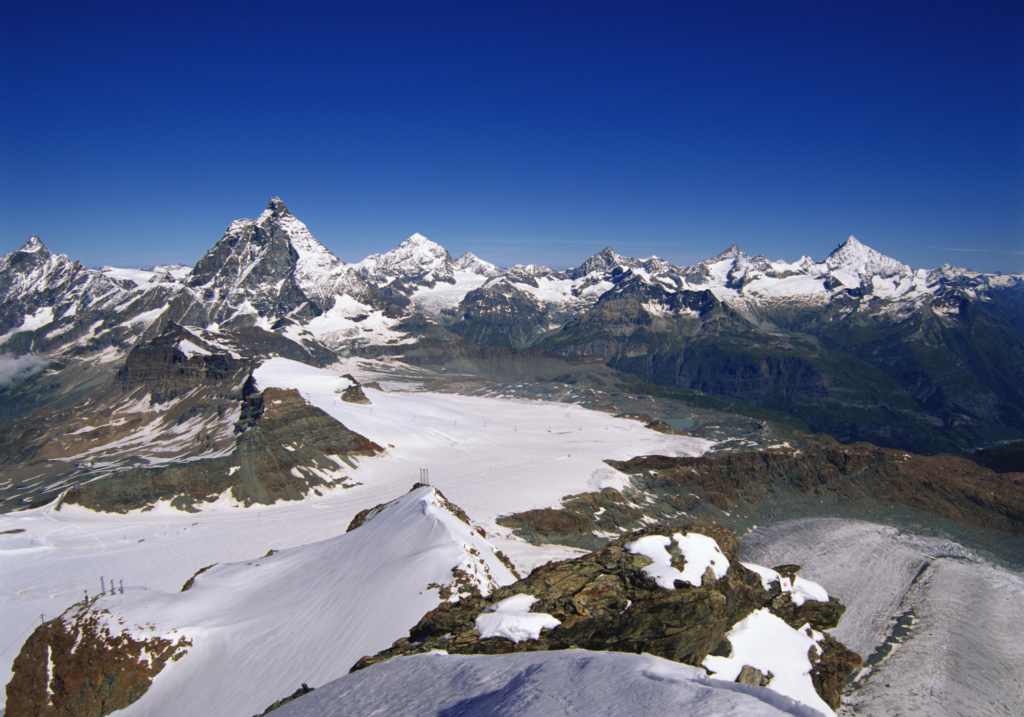
At around 1,300 metres above sea level, La Vue des Alpes and Tête de Ran embody the vastness of the Jura in winter. Snow traces long, pale lines across the ridges, and on clear days the Alpine range appears on the horizon.
Whether you come for cross-country skiing, snowshoeing or just to take in the view, the impression is the same. Lake Neuchâtel, the Swiss Plateau and the Alps coexist in a single frame, creating a sense of scale that defines the winter landscape here.
The La Brévine valley: winter in its purest form
Often referred to as the “Siberia of Switzerland”, the La Brévine valley is one of the strongest symbols of winter in the Jura. Temperatures can be extreme, but the scenery remains gentle and remarkably still.
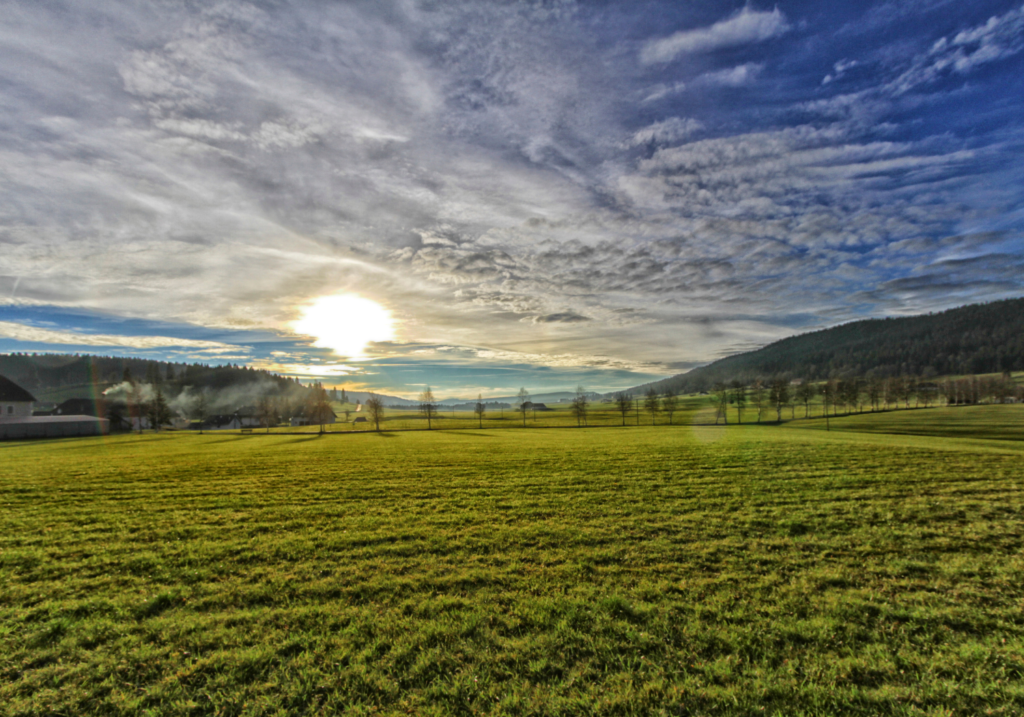
Forests, open fields, isolated farms and Lake des Taillères form a landscape that seems to pause when frost settles in. This is a place for slow movement and quiet observation, where winter feels raw, simple and deeply authentic.
Staying in Neuchâtel to explore wide winter landscapes
What makes these landscapes so accessible is their proximity to the city. From Neuchâtel, valleys, passes and high plateaus can be reached quickly, allowing you to combine time in nature with the comfort of an urban setting.
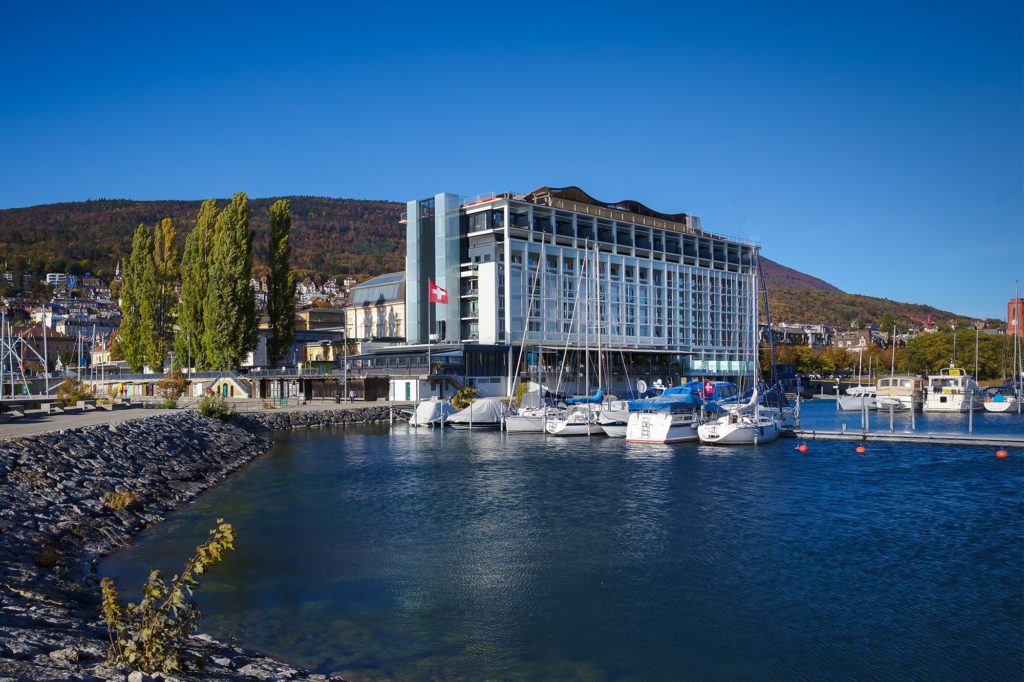
Staying at the Hôtel Beaulac, right on the lakeshore, provides exactly that balance. After a day spent in the wide open spaces of the Jura Three-Lakes region, you return to calm surroundings by the water.
Here, winter is not a season to retreat from, but an invitation to slow down, to look further, and to experience the region in a quieter, more expansive way.