If you have ever driven to Mam Tor before dawn hoping to find the Hope Valley filled with cloud, you already understand the appeal. You also understand the odds. In Britain a proper cloud inversion is a matter of luck, chased by photographers a handful of mornings a year and missed far more often than caught.
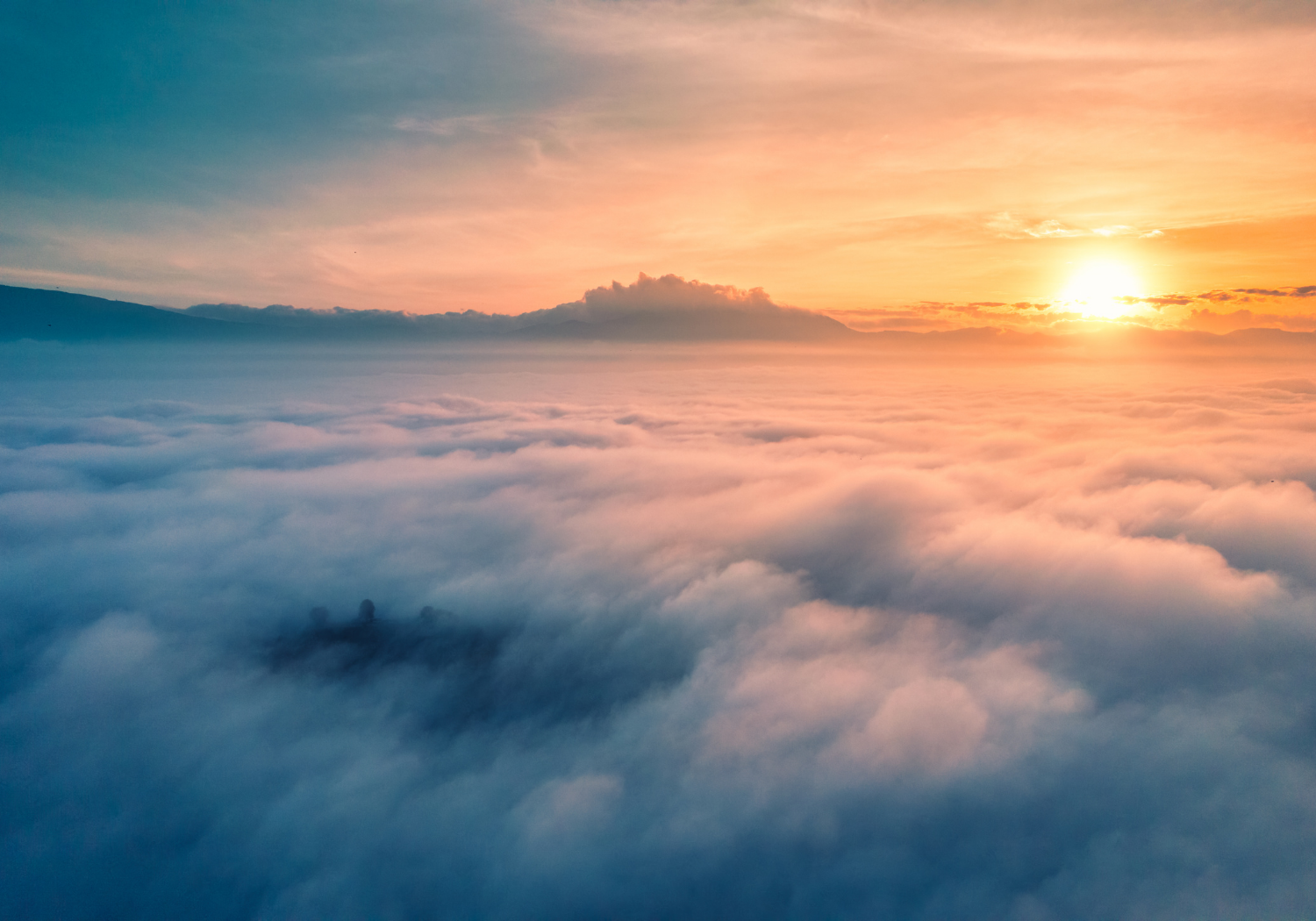
On the Swiss plateau it works differently. From November to February the phenomenon is not an accident but a season. Cold air pools in the basin between the Jura and the Alps, a lid of warmer air seals it in, and the whole country between Geneva and Zurich disappears under a flat white layer for days at a time. Above that layer the sky is completely clear. The Swiss call it the sea of fog, and they treat it as a reason to go up rather than a reason to stay in.
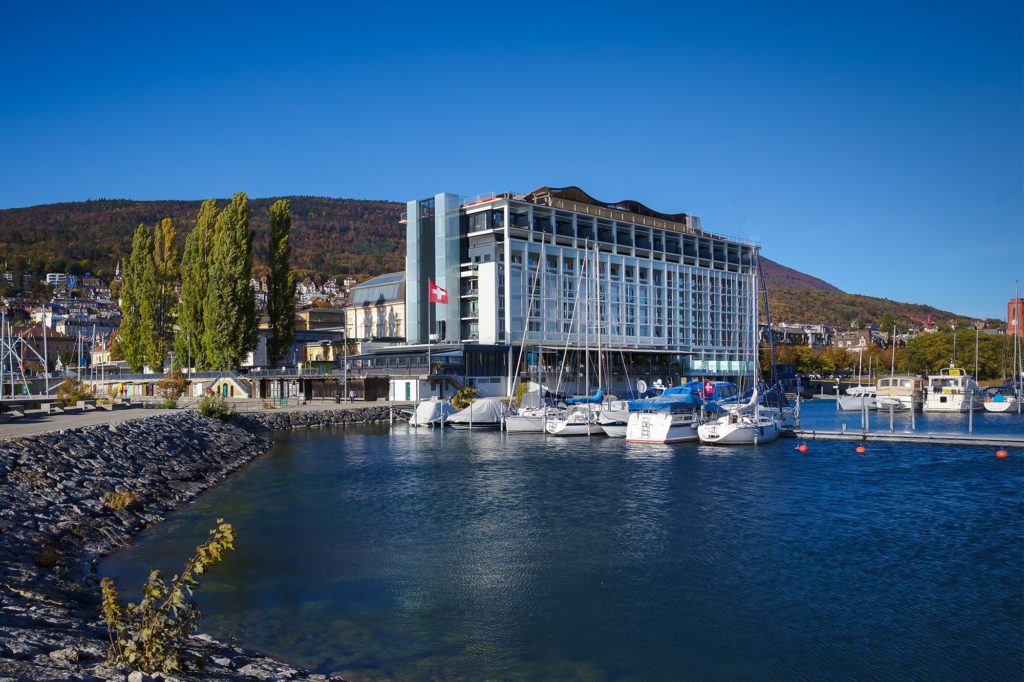
Neuchâtel is one of the easiest places in the country to do exactly that. Its local mountain, Chaumont, is served by a funicular from within the city limits, which means you can be having breakfast by the lake and standing above the cloud thirty minutes later. Hôtel Beaulac sits on the lakeshore a few minutes from the station.
Book a weekend in November or December at beaulac.ch, when rates across the region are at their lowest and the odds are at their best.
What is actually happening above your head
This is not fog in the ordinary sense. It is a layer of stratus filling the bowl of the Swiss plateau, and the mechanism is worth understanding because it dictates how you plan the day.
Under settled high pressure in autumn and winter, cold air forms each night and drains slowly out of the Alpine valleys and the Jura into the plateau, where it collects. Above it the air stays milder and much drier. The result is a temperature inversion: contrary to normal expectation, it gets warmer as you climb. That inversion behaves like a lid on a pan and stops all vertical exchange of air. Beneath it, moisture accumulates until it saturates and condenses into an even sheet of cloud. Above it, the sky is cloudless.
Two practical consequences follow. The layer only breaks up with stronger wind, usually when a cold front passes through, which is why it can sit in place for days. And less appealingly, fine particulates accumulate under the inversion too, sometimes reaching high concentrations. Going up is not merely more pleasant; it is better air.
November and December are the classic months. That is when the layer is most likely to persist all day, because the sun is no longer strong enough to warm the ground and dissolve it. In September and October the phenomenon appears regularly first thing but often burns off by midday: in late September, a layer topping out around a thousand metres has only a ten to twenty per cent chance of lasting until evening.
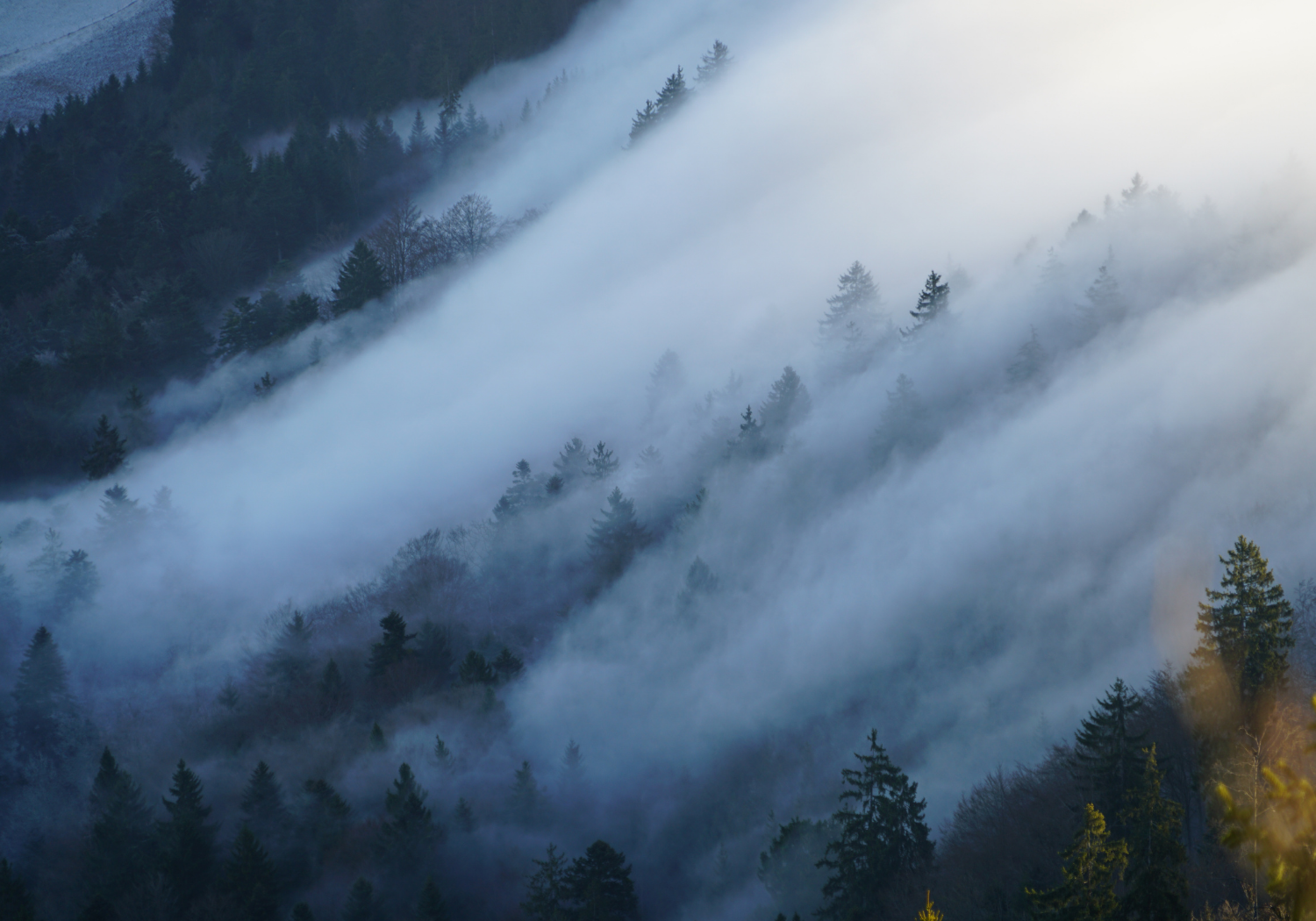
Why Chaumont works, and when it does not
This is the part the tourist literature leaves out, and it determines whether the morning is worth it.
The funicular’s upper station sits at 1,087 metres, and Chaumont’s summit at 1,180. The top of the stratus layer usually lies between 700 and 1,000 metres. In that configuration you are above it, and you get your sea of fog.
But that ceiling moves. During a bise, the northeasterly wind that accompanies certain high pressure patterns, air banks up against the Jura and the layer rises, frequently above a thousand metres. On those days Chaumont is not above the cloud, it is inside it. You spend thirteen minutes climbing to stand in grey murk at five degrees.
Checking takes five minutes on the morning itself, and three sources cover it.
MeteoSwiss forecasts state the upper limit of the stratus layer as a matter of routine. That figure is your decision point: below a thousand metres, go up. Above it, change the plan.
Webcams on the surrounding heights show the actual situation, which beats any forecast. MeteoSwiss explicitly recommends consulting them on the morning of a planned outing, since surprises remain possible and the ceiling is almost never uniform across the plateau.
The MeteoSwiss app collects reports from users indicating whether they are in fog, under the stratus or under clear sky, often with a photograph. It is the most reliable check of the three.
The funicular, in practice
Getting there runs entirely on public transport. From the north exit of Neuchâtel station, trolleybus 107 reaches the La Coudre district in ten to fifteen minutes. The lower funicular station is there, at 517 metres.
From that point, line 111 climbs 570 metres over a little more than two kilometres, on gradients ranging from fifteen to forty-six per cent, crossing four viaducts. Thirteen minutes. It runs all year, though service thins at weekends to roughly one departure an hour, so check the timetable and particularly the last descent.
On a stratus day the ride alone justifies the fare. You set off in grey, the car climbs, and at a specific point you break through the layer. The light changes within seconds.
At the top, the observation tower dating from 1912 adds around twenty metres and opens the view in every direction: the three lakes of Neuchâtel, Biel and Murten, and behind them the full Alpine chain as far as Mont Blanc. Entry costs a one-franc coin, so carry change. There is a restaurant with a panoramic terrace near the upper station, which settles both lunch and the business of warming up.
Several paths leave the plateau, including a geological trail that descends towards Neuchâtel. If you would rather walk up, allow an hour and a half to two hours and six hundred metres of ascent.
Worth knowing: hotels in the region issue guests a card covering local public transport, funicular included. Ask at reception.
If the ceiling is too high
A ceiling above a thousand metres does not write off the day. It means going higher, and the canton has options reachable from Neuchâtel.
La Vue-des-Alpes, at 1,283 metres, is served by train and bus. Tête de Ran sits a little above that, over 1,400 metres. And Le Soliat, on the rim of the Creux du Van, reaches 1,463 metres, which clears almost any layer and lets you combine the inversion with the rock amphitheatre in a single day.
The question, in other words, is not whether there will be a sea of fog. It is what altitude you need to collect it from.
A November weekend by the lake
There is a contradiction at the heart of this season. November and December are widely written off as the least appealing months on the Swiss plateau, and they deliver the region’s most striking natural spectacle, provided you can read a weather bulletin. They are also the cheapest and quietest weeks of the Swiss calendar, which is not a coincidence and is very much to your advantage.
Hôtel Beaulac is the practical base. You are on the water, minutes from the station, and the transport card issued on arrival covers the bus and the funicular. You check the stratus ceiling over breakfast, decide on your altitude, and are up before ten. In the evening you come back down into the grey with a full day of sunshine behind you and a table facing the lake.
Book your autumn or winter weekend at beaulac.ch and keep one morning free. The rest depends on the weather, which is precisely what makes it interesting.