Britain understands industrial World Heritage better than most countries. Saltaire, New Lanark, the Derwent Valley mills: places where an industry did not merely occupy a town but produced one.
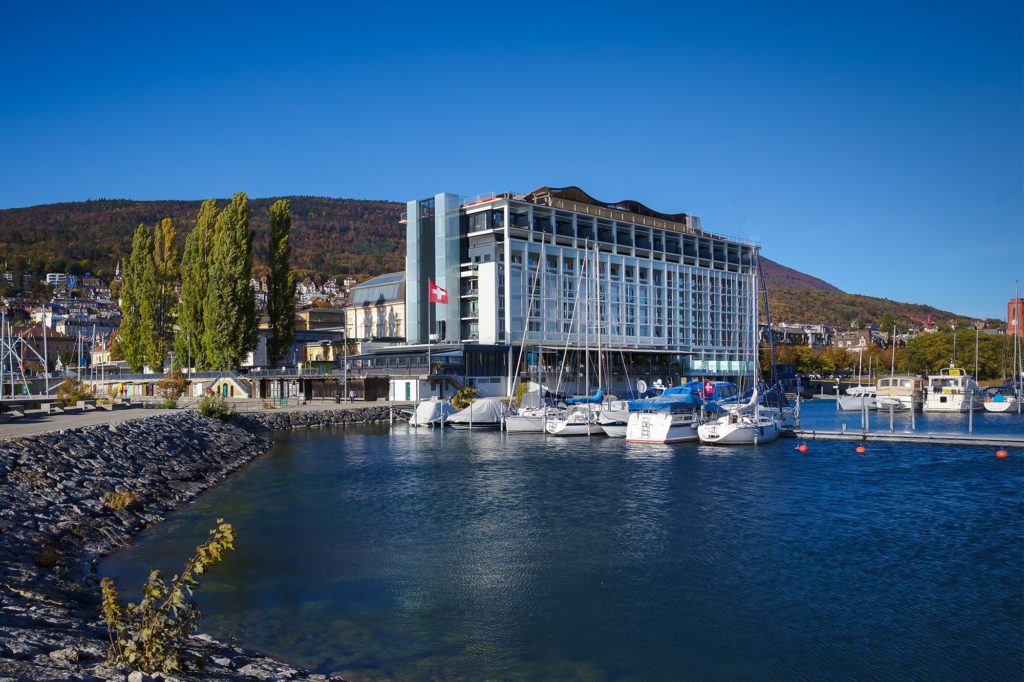
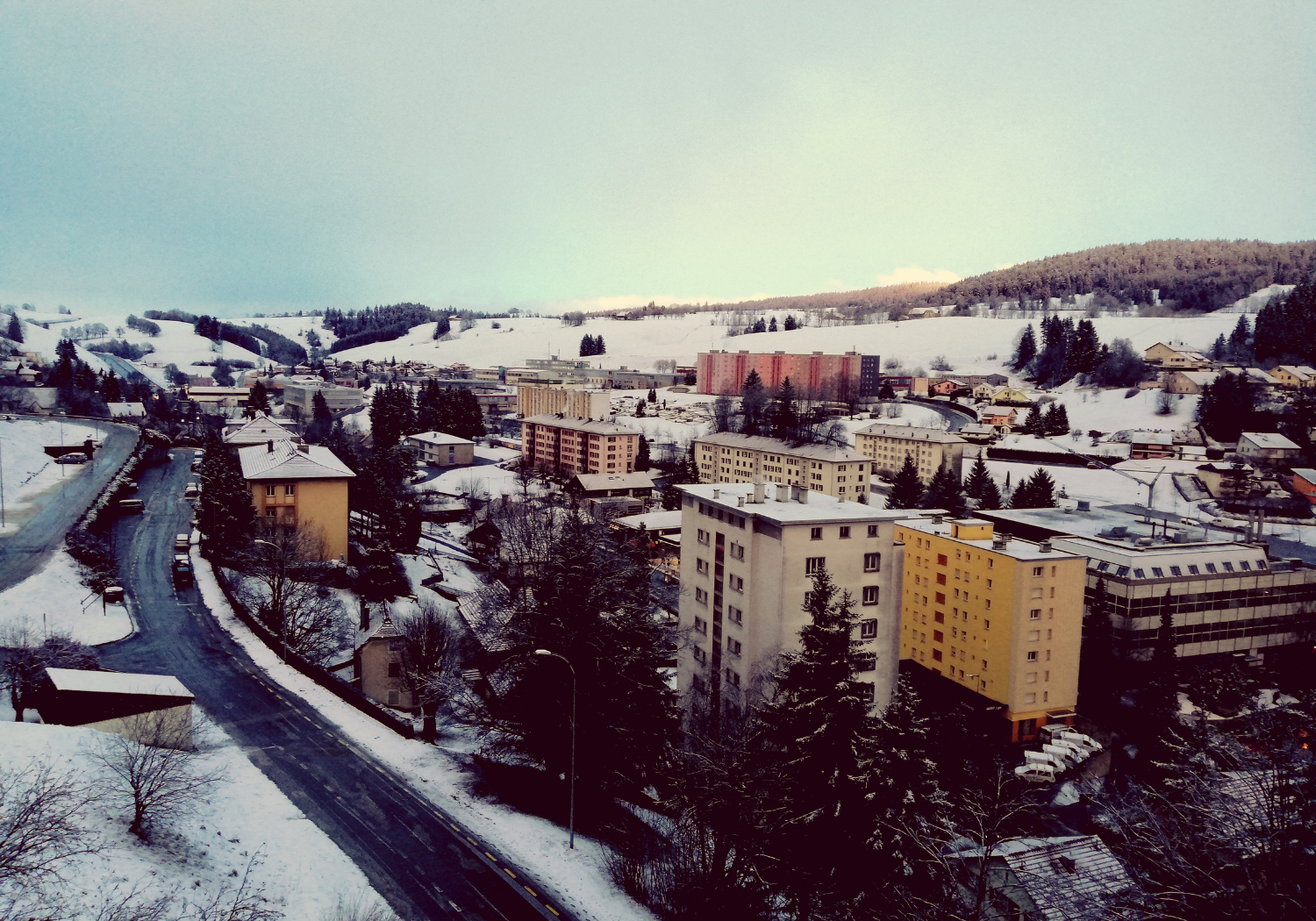
Switzerland has its own entry on that list, and it is stranger than any of them. In June 2009, UNESCO inscribed La Chaux-de-Fonds and Le Locle under the heading Watchmaking Town Planning, recognising not a factory, not a mill, not a single monument, but the street plan of two towns in the Jura mountains, drawn to suit the making of watches. Neither is a museum piece. Both are still working. From Neuchâtel the journey takes around half an hour by train, which makes it the best day out from the lakeside, and Hôtel Beaulac is the most practical base from which to plan it.
Two fires and a blank page
The story begins with disaster. Fire destroyed La Chaux-de-Fonds entirely in 1794. Le Locle burned in 1833 and again in 1844. On each occasion the inhabitants made a decision that looks obvious now and did not at the time: rather than rebuild what had stood there, they treated the ruin as an opportunity to redesign the town from scratch around a single activity.
The plan formalised in 1834 by the roads engineer Charles-Henri Junod arranges the town in parallel bands. Streets run lengthways, buildings are oriented so that daylight reaches the workshops, and, crucially, homes and workspaces remain interwoven within the same buildings. The watchmaker lived upstairs and worked at the window, because before electric light, daylight was the raw material of the trade.
Here is where it differs from Saltaire or New Lanark, and it is the detail worth carrying around with you. Those were built by an owner, for workers, according to one man’s convictions. La Chaux-de-Fonds had no such figure. It was rebuilt by a community of independent artisans, in a region with no guild system to speak of, through a negotiated settlement between private and public interests. It is not a company town. It is a collective one, which is a considerably rarer thing to find preserved anywhere.

What to look for once you know
Without a key, you walk through La Chaux-de-Fonds noticing that the streets are wide and the buildings similar. With one, the place becomes absorbing inside ten minutes.
Look first at the windows. Workshops often occupied the top storey, where the light is best, and the openings there are larger, sometimes running the full width of the façade. Look next at how the streets are aligned, consistently set so that sun enters rather than being blocked by the building opposite, which explains their unusual width. Then look at the courtyards and gardens between the built bands, planned from the outset as breathing space and never filled in since.
Taken together it amounts to a lesson in rationalist town planning delivered a century before the term existed. Guided walks, on foot or by tourist train, will explain it on the spot.
Museums, mills, and what you cannot visit
The Musée international d’horlogerie in La Chaux-de-Fonds holds one of the most important horological collections anywhere, running from automaton clocks to highly complicated wristwatches. It is the essential visit and will fill half a day comfortably.
In Le Locle, the watch museum occupies the Château des Monts, an eighteenth-century manor on a rise above the town. The experience is quieter, almost domestic, and the house alone justifies the walk up.
Also at Le Locle are the underground mills at Col-des-Roches, a complex built inside a cave and worked for centuries to extract water power in a region with almost no rivers at the surface. It is remarkable, it is subterranean, and it is entirely indifferent to the weather.
One practical note before you plan. Several major watch houses are headquartered in the two towns, but the manufactures are not generally open to the public. The museums tell the same story and welcome everyone, which is the more useful thing to know before you travel with expectations.
Le Corbusier, born on the grid
It is easily forgotten that Charles-Édouard Jeanneret, later Le Corbusier, was born in La Chaux-de-Fonds in 1887 and built his first works there. The connection is hard to ignore: the man who theorised the functional city grew up in the one Swiss town constructed as a machine. Several early buildings survive, among them the Villa Turque and the Maison blanche. We devote a separate article to his career and to what he left behind in the region, which reads well alongside this one.
Getting there from Neuchâtel: the rainy-day insurance
This is the detail that makes the trip work. Trains connect Neuchâtel with La Chaux-de-Fonds and on to Le Locle at half-hourly intervals, around thirty minutes to the first town and roughly ten more to the second. You leave after breakfast and are back for a drink before dinner. The line climbs above a thousand metres on the way, and it is one of the finest railway journeys in the canton.
More to the point, it is the outing that works when nothing else does. In rain, in fog, in the middle of winter, the museums and the streets are exactly as interesting as they were going to be anyway. For a two or three-night stay in Neuchâtel, this is the day to keep in reserve for the morning when the weather makes your decisions for you.
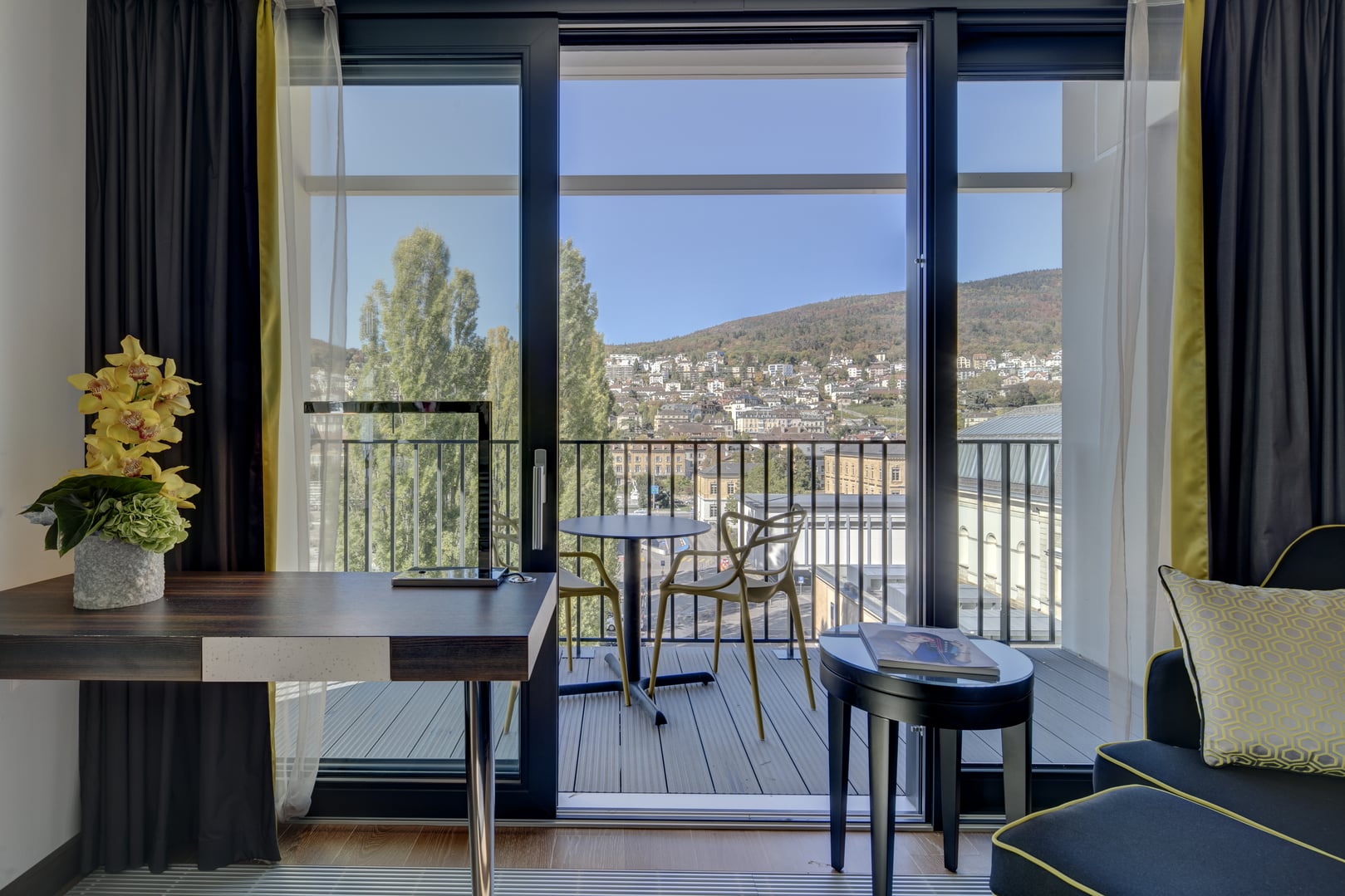
Hôtel Beaulac sits on the quays, a short distance from the station these trains leave from. Guests staying overnight in the canton receive the Neuchâtel Tourist Card, covering public transport across the canton, mountain line included. Book your stay on +41 32 723 11 11 or at https://beaulac.ch, and set aside a day for two towns that were invented in order to measure time.