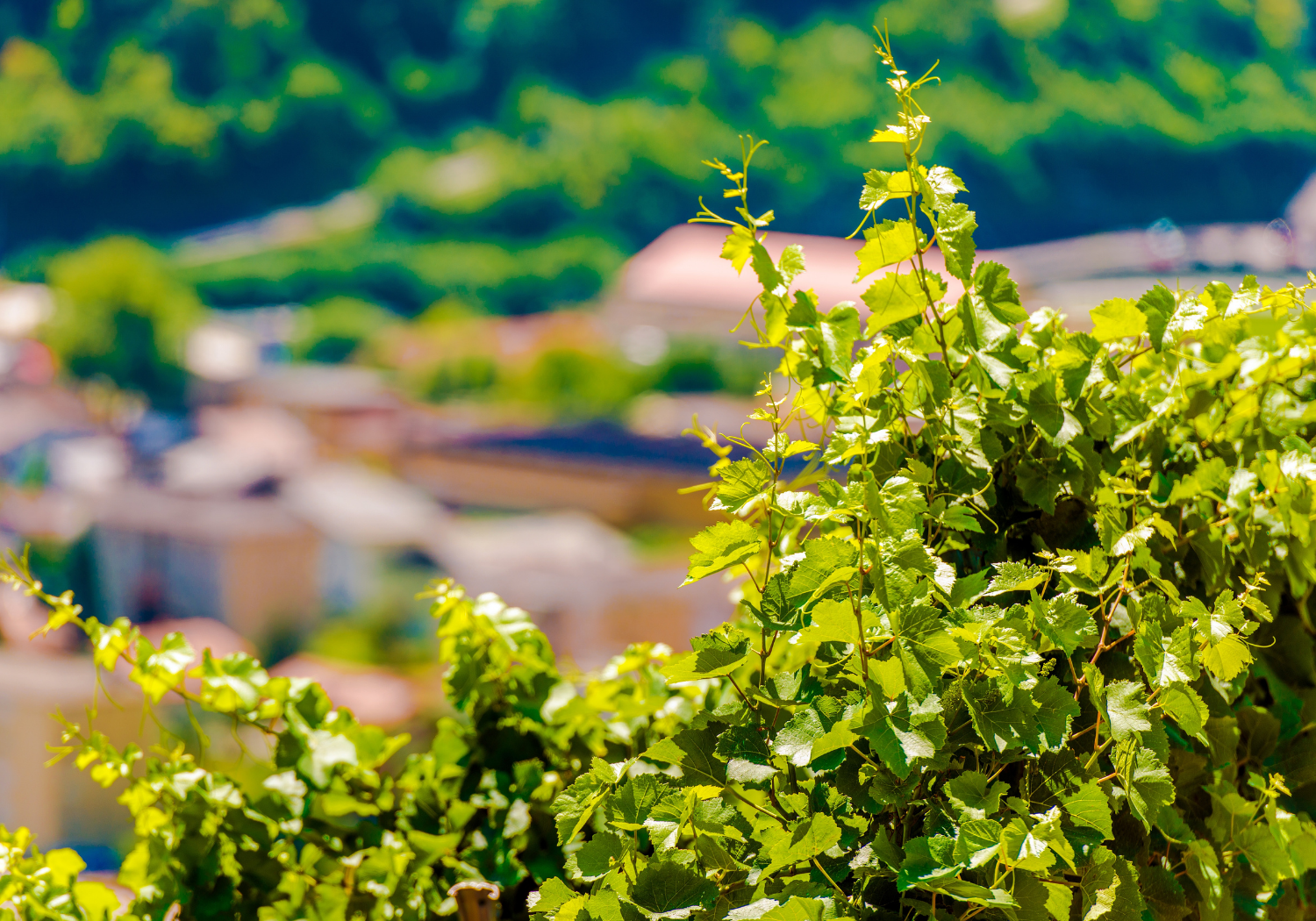
Here is an unusual selling point for a wine region: you cannot buy any of it at home. Fifty-four growers work around six hundred hectares and produce an average of thirty-three thousand hectolitres a year, of which exports account for barely one per cent. Everything else is drunk within a few kilometres of where it was grown, in the tasting cellars along the lake, on the wine lists of the old town, at local kitchen tables. Even in Switzerland, Neuchâtel wine is something of a specialist subject.
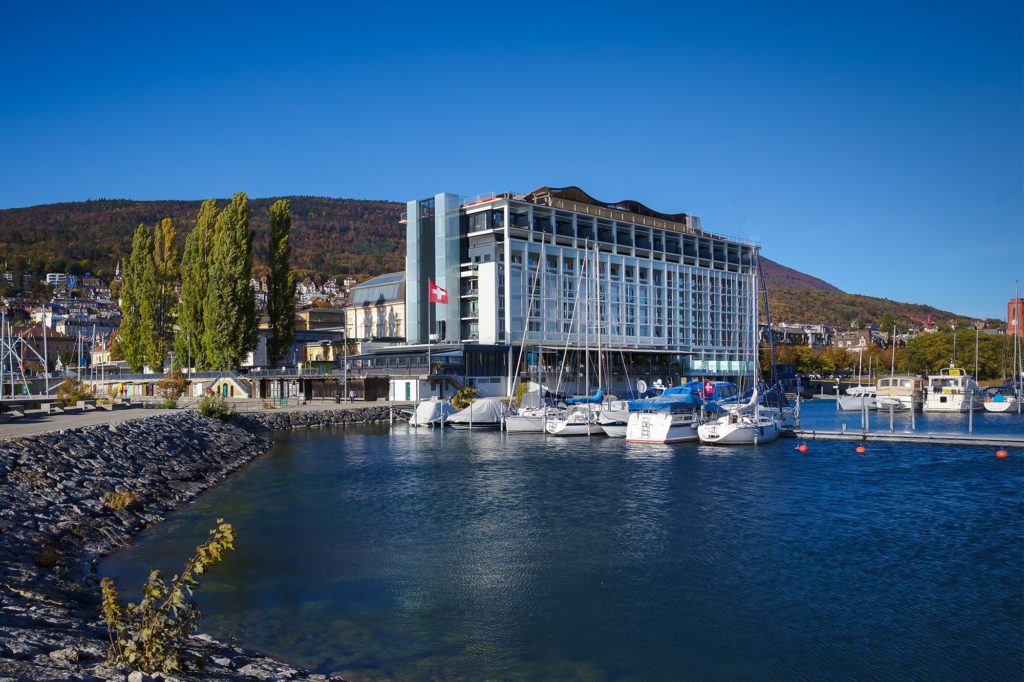
This is the smallest wine region in the country, and that is precisely what makes it worth a day of your time. From Hôtel Beaulac on the lakeshore you are a few minutes from the terminus of the tram that runs through the vineyards. A morning is enough to understand the region; a day is enough to walk it.
Book your stay at beaulac.ch and keep an afternoon clear, because this is not the sort of thing you can arrange from home.
Three wines you will not find at home
The Neuchâtel vineyards run for more than thirty kilometres, from Le Landeron in the east to Vaumarcus in the west, along the northern shore of the lake. They occupy a narrow band at the foot of the first ridge of the Jura. The lake moderates both winter cold and summer heat, the Jura arc shelters the slopes from damp Atlantic weather, and the easterly aspect provides ventilation and morning sun. The soils are of Jurassic origin, limestone and stony.
Only twelve grape varieties qualify for the appellation, with white varieties on forty per cent of the area and reds on sixty, predominantly Pinot Noir. But the character of the canton rests on three wines.
Non Filtré is the most unusual. It is a Chasselas bottled without final filtration, and it is the first Swiss wine of each year. It is released on the third Wednesday of January, and the label is deliberately stuck on upside down so that you turn the bottle before pouring and put the lees back into suspension. That Wednesday is a genuine event in the canton, with tastings and a good deal of local fuss. It is also the one Neuchâtel wine that travels, reaching Germany, the United States and Japan in meaningful quantities.
Oeil-de-Perdrix, meaning partridge eye, is a rosé made entirely from Pinot Noir and vinified as though it were a white, its salmon tint giving the wine its name. It was created in Neuchâtel in the nineteenth century, which is why specialists treat Neuchâtel Oeil-de-Perdrix as the original. The name was later adopted in other cantons, but it began here.
Pinot Noir is where the region reaches its ceiling. Neuchâtel was the first Swiss canton to impose yield limits, which gave the variety the complexity and the ageing capacity it now has. Prices start at around eleven francs for a Non Filtré and run to roughly forty-five for a very good Pinot Noir, which by Swiss standards is not extravagant.
None of this is recent. Wine was made here in Roman times, and the earliest documented reference appears in the founding charter of Bevaix Priory.
The wine villages, from Auvernier to Le Landeron
The region reads as a sequence of villages, each with its own character.
Auvernier is the most photographed, and deservedly so: the centre has kept its seventeenth and eighteenth century architecture almost intact, with stone fountains and yellow sandstone doorways. The commune has seventy hectares under vine, mostly Chasselas, and Château d’Auvernier, with twenty-six hectares, has belonged to the Grosjean family since 1603. It is seven minutes from the centre of Neuchâtel by tram and the obvious place to start.
Cortaillod has a reputation of its own, built on a particular Pinot Noir clone that carries the village name and has been planted well beyond the region. Its slopes are among the most attractive in the area.
Boudry concentrates most of what a visitor actually wants, with its château and its tasting cellar.
Further east, the Entre-deux-Lacs changes mood. Cressier, Saint-Blaise and Le Landeron sit closer to Lake Biel, see fewer visitors, and their estates tend to be smaller family concerns.
Where you can actually taste
This is where most visitors come unstuck, because Neuchâtel has no signposted wine route with cellars open on demand. It works on three levels instead.
The shared tasting cellars, or caveaux, are the simplest option, since they bring together wines from several growers under one roof. There are three: Boudry, Cortaillod-Bevaix and Entre-deux-Lacs. The one at Boudry is the most memorable: it occupies the Tour de Pierre, a small medieval-looking building set among the vines, and its terrace looks out across the whole slope. Check opening times before you go, as they are limited and vary by season.
Château de Boudry serves as the official front door. It houses the museum of vine and wine along with an oenothèque, and you can taste wines and regional produce in a setting that justifies the trip on its own. Go here first if you would rather understand before you drink.
Individual estates take a little more organising but give you the most direct contact. Several receive visitors by appointment, offering a cellar visit, a tasting, and sometimes a marked walk through their own vines. Names that appear regularly in the guides include Caves du Château d’Auvernier, Domaine de la Maison Carrée at Auvernier, Domaine de Chambleau at Colombier, Domaine des Cèdres at Cortaillod, Grillette at Cressier and Domaine Saint-Sébaste at Saint-Blaise. An email a few days ahead is usually enough, and English is widely spoken.
If you are visiting in spring rather than autumn, note the Caves Ouvertes, two days in early May when growers open their doors and shuttle buses run between the three zones of the region.
Getting there by tram, and when to come
Neuchâtel is one of very few wine regions in Europe you can cross by tram. The Littorail runs from Place Pury in the centre of Neuchâtel along the lake to Boudry, calling at Auvernier, Colombier and Areuse among others. Services run every twenty minutes and serve twelve stops in total. Auvernier is seven minutes away, Boudry under twenty. Cortaillod came off the line in the 1980s and is now reached by bus.
The best use of it is to get off at Auvernier, walk through the village, then continue on foot through the vines towards Boudry with the lake on your left. Around an hour and a half of easy walking with no real climb, and a tasting cellar or a château at the far end.
As for timing, autumn makes the strongest case. The harvest gives the slopes an activity they lack the rest of the year, low light picks out the contours of the terraces, and the leaves turn. It is also the season of the torrée, a Neuchâtel tradition in which the local sausage is cooked in wood embers and eaten with salad and a glass of Pinot Noir. If you are offered one, accept.
A practical note on buying: since almost nothing is exported, anything you want to take home has to be bought here. Swiss wine travels well in hold luggage, and most estates will pack a case properly if you ask.
An afternoon in the vines, an evening by the lake
Neuchâtel is not Burgundy or Piedmont, and it does not pretend to be. It is small, understated and largely free of wine tourism machinery, which is exactly the point: you will be drinking wines you cannot get at home.
Hôtel Beaulac is the practical base for it. You are on the lakeshore, minutes from the tram, with a wine list built around regional producers and staff who know the estates. You come back from an afternoon among the vines, sit down facing the water, and carry on tasting over dinner.
Book your autumn stay at beaulac.ch and give this region the afternoon it deserves.